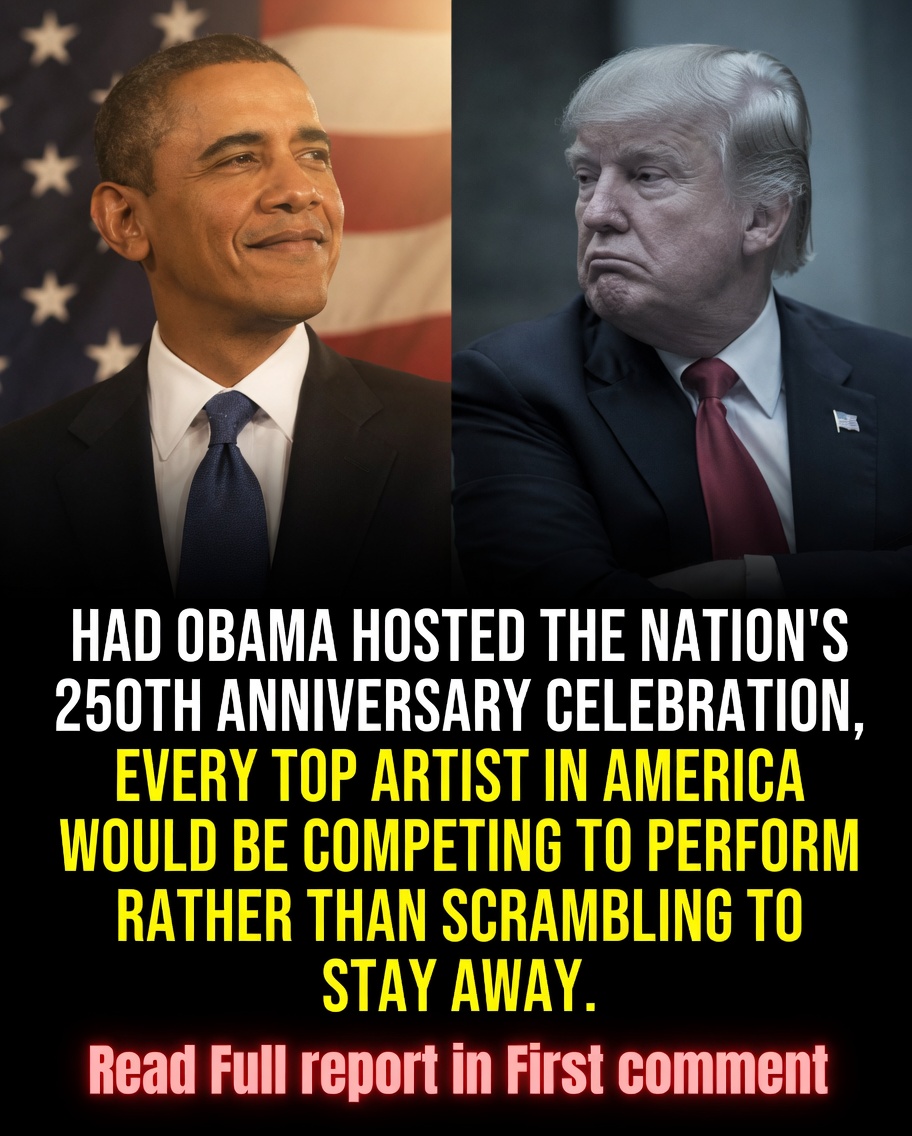
A provocative meme comparing former Presidents Barack Obama and Donald Trump has gone viral on social media, spotlighting growing reports that major musicians are reportedly avoiding performances at upcoming events tied to America’s 250th anniversary celebrations under the current Trump administration.
The image, widely shared across platforms including X (formerly Twitter), features a smiling Obama against an American flag backdrop juxtaposed with a stern-looking Trump. Bold yellow text declares: “If Obama threw America’s 250th birthday party, every major musician in the country would be fighting for a spot on the stage instead of desperately trying to avoid it.” The post is credited to @JAMIEBONKIEWICZ.
The 250th Anniversary Backdrop
America’s Semiquincentennial — marking 250 years since the signing of the Declaration of Independence on July 4, 1776 — is set to be one of the largest national celebrations in U.S. history. With major events planned in Washington D.C., Philadelphia, and across the country, the Trump administration has positioned the festivities as a patriotic showcase of American exceptionalism.
However, behind-the-scenes reports and public statements suggest a significant chill in Hollywood and music industry enthusiasm. Multiple high-profile artists and their representatives have reportedly declined invitations or expressed reluctance to participate in large-scale performances associated with the administration, citing political differences.
The Viral Meme’s Message
The meme taps into a long-standing narrative of divergent celebrity support for the two presidents. During Obama’s tenure, musicians like Beyoncé, Bruce Springsteen, Jay-Z, and countless others eagerly headlined inaugural balls, campaign events, and national celebrations. In contrast, Trump’s previous term and current administration have seen widespread public criticism and performance refusals from many A-list entertainers.
Social media users have amplified the image with comments ranging from “This is exactly why Trump won” to accusations of Hollywood elitism and political hypocrisy. The post has sparked heated debates about whether artists should separate their craft from politics when it comes to celebrating the nation itself.
Industry Reluctance and Political Polarization
Sources familiar with event planning for America 250 initiatives confirm that organizers have encountered difficulties securing top-tier musical talent. While some country artists and more conservative-leaning performers have shown interest, mainstream pop, hip-hop, and rock superstars have largely been absent from early announcements.
This dynamic echoes patterns observed during Trump’s first term, where several major acts publicly turned down inauguration-related performances. Industry insiders point to intense pressure within artist management circles and fear of fan backlash on social media as key factors.
Critics of the entertainment industry argue this reluctance reveals a deeper cultural disconnect — one where celebrating America is viewed through a partisan lens. Supporters of the administration counter that true artists should embrace opportunities to perform for the entire country, regardless of who occupies the White House.
Public Reaction and Broader Implications
The meme’s rapid spread underscores persistent divisions in American culture nearly a decade after Trump first entered the political arena. Polling data has consistently shown a sharp partisan split in celebrity influence: Democrats tend to view Hollywood endorsements positively, while Republicans often see them as out-of-touch.
As July 4, 2026 approaches, questions remain about how the celebrations will ultimately look. Will the events feature a broad spectrum of American talent, or will they lean heavily into genres and artists more aligned with the current administration?
What’s Next?
Organizers for America 250 have not yet released a full lineup for major events. The White House has emphasized that the celebrations will focus on American history, innovation, and unity — themes intended to transcend politics.
Whether the viral meme proves prophetic or merely reflects partisan talking points will become clearer in the coming weeks as more details emerge about performers and programming.